Patterns of Incentive Distribution Across Poker, Sports, and Casino Verticals on Government-Sanctioned Digital Platforms
Taylor Hughes · Jun 29, 2026
Patterns of Incentive Distribution Across Poker, Sports, and Casino Verticals on Government-Sanctioned Digital Platforms
Government-sanctioned digital platforms distribute incentives differently across poker, sports betting, and casino verticals because each vertical operates under distinct regulatory frameworks and player engagement models, and data from multiple jurisdictions shows consistent variations in how deposit matches, loyalty rewards, and risk-mitigation offers reach users. In June 2026 these patterns continue to evolve as states and provinces refine their oversight of online gambling ecosystems.
Sports Betting Incentive Structures
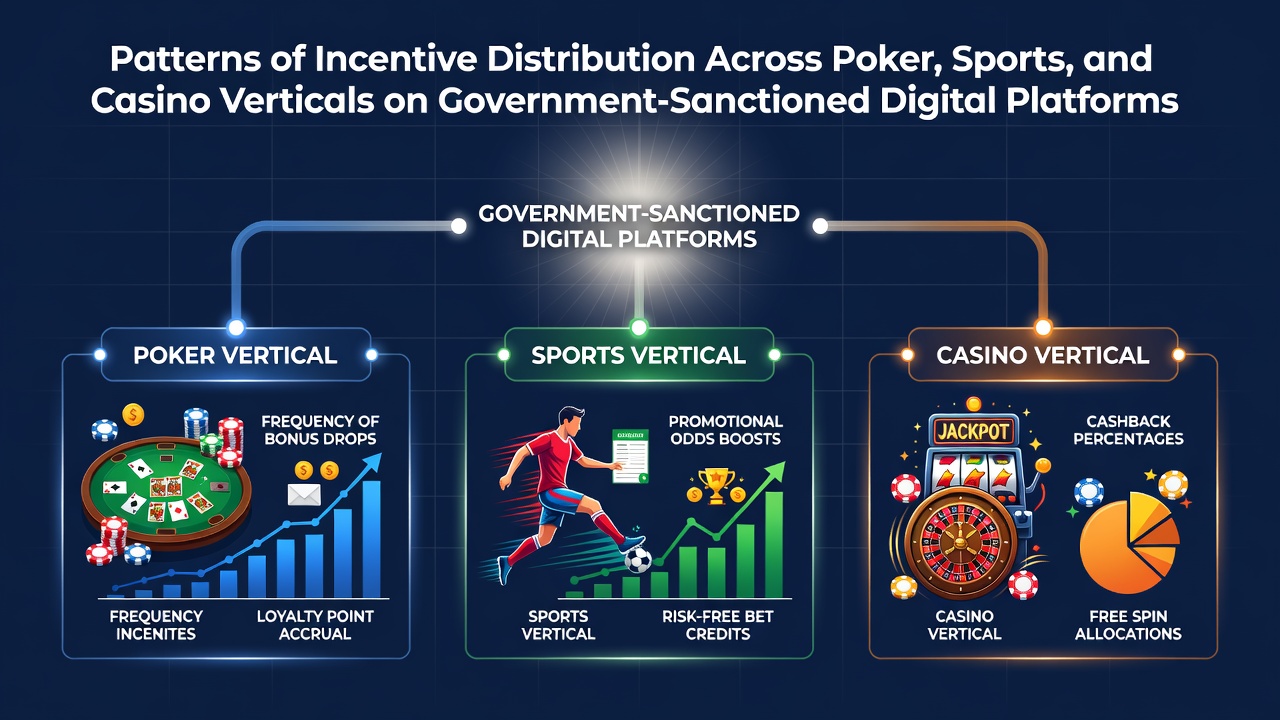
Regulated sportsbooks on authorized platforms allocate a large share of promotional value to event-tied offers such as matched deposits and risk-free wagers, particularly around major tournaments. Figures from the Massachusetts Gaming Commission indicate that sports betting accounts for roughly 45 percent of total incentive spend in states with mature markets, with operators concentrating resources on pre-match and live-betting bonuses that activate during high-volume periods like the ongoing 2026 international football calendar. Observers note that these incentives often carry wagering requirements tied directly to the sport or league selected, which creates measurable differences in redemption rates compared with other verticals.
Regional data further reveals that sports verticals favor percentage-based deposit matches capped at fixed dollar amounts, while cashback programs activate only after a threshold of settled wagers is reached. This approach aligns with regulatory emphasis on responsible play, since operators must report hold percentages and promotional liability separately from standard revenue streams.
Casino Vertical Distribution Patterns
Casino sections on the same licensed platforms emphasize game-specific rewards such as free spins, deposit matches for slots or table games, and tiered loyalty points that convert into playable credits. Research compiled by the Alcohol and Gaming Commission of Ontario shows casino incentives represent approximately 35 percent of overall promotional budgets in integrated markets, with reload offers and cashback loops appearing more frequently than in sports products. These rewards typically reset on a weekly or monthly cycle, and eligibility often depends on volume of spins or hands rather than single-event participation.
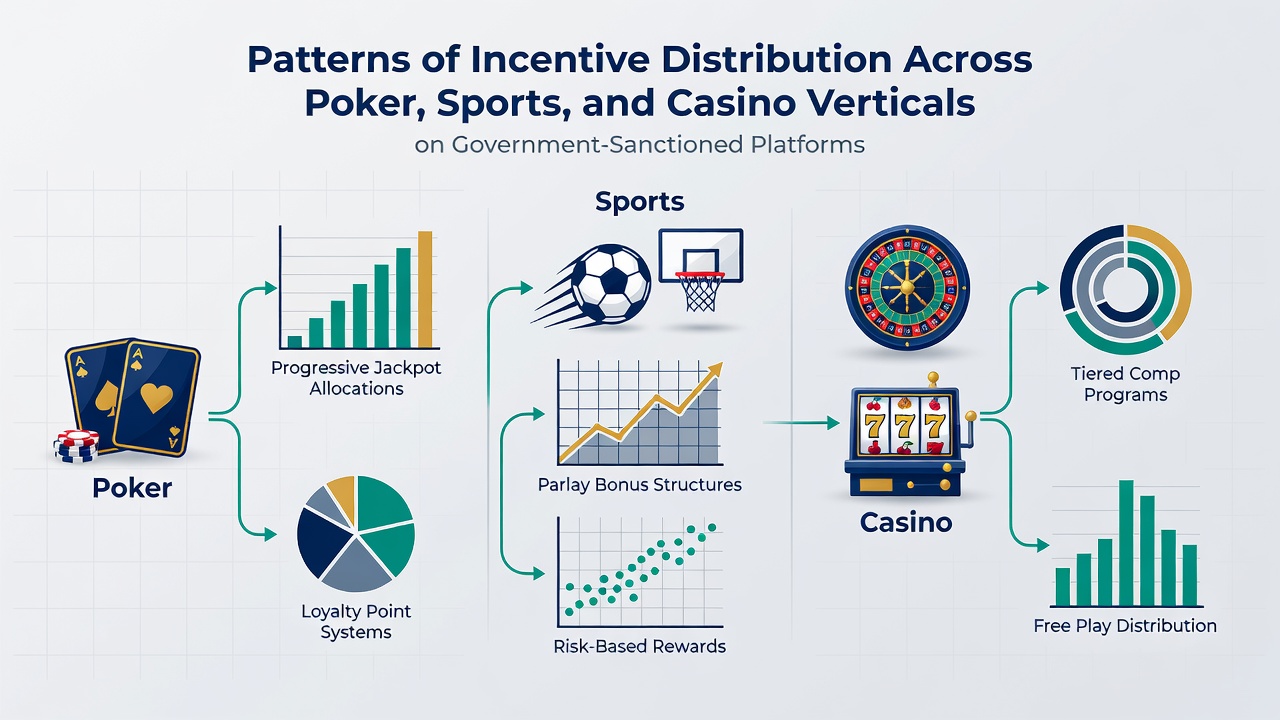
Operators structure casino incentives to encourage longer session times, which regulators track through session-length reporting requirements. As a result, many platforms link casino rewards to progressive jackpots or multi-game challenges that span several days, producing redemption patterns that differ markedly from the shorter, event-driven cycles seen in sports betting.
Poker Platform Reward Models
Poker rooms within government-sanctioned environments distribute incentives primarily through tournament tickets, rakeback percentages, and leaderboard challenges that reward consistent volume across multiple sessions. Available regulatory summaries indicate poker incentives comprise about 20 percent of total promotional allocations, yet they generate high retention among a smaller but highly engaged user base. Freeroll tournaments and matched deposit credits for tournament buy-ins remain common because these offers tie directly to the skill-based nature of the vertical and comply with state rules that separate poker from chance-based casino games.
Those who have examined player data across platforms observe that poker rewards frequently include milestone bonuses tied to hands played or tournament cashes, creating longer qualification windows than the deposit-triggered offers common in sports and casino sections. This structure supports regulatory goals of promoting measured play while still delivering value to regular participants.
Cross-Vertical Comparisons in June 2026
When examined together, the three verticals display clear differences in timing, eligibility criteria, and reward types. Sports incentives cluster around calendar events, casino rewards follow calendar-based reload cycles, and poker incentives emphasize volume-based progression. State-level reports from June 2026 confirm that integrated platforms increasingly allow loyalty points earned in one vertical to convert into credits usable across the others, although conversion rates remain lowest when moving from poker to sports products.
These patterns reflect both operator strategy and regulatory constraints that require transparent reporting of promotional liability. Platforms that operate under multiple state licenses adjust incentive menus by jurisdiction, producing additional variation in how quickly users can access and redeem offers.
Conclusion
Patterns of incentive distribution across poker, sports, and casino verticals on authorized digital platforms continue to reflect the distinct operational and regulatory realities of each product. Data collected through mid-2026 demonstrates that while cross-vertical loyalty integration is expanding, the core allocation methods—event-driven for sports, session-driven for casino, and volume-driven for poker—remain stable. Regulators and operators alike track these distributions to maintain compliance and player protection standards across all sanctioned environments.