State Regulations Drive Changes in How Initial Play Credits Align with Identity Verification on Mobile Platforms
Casey Hayes · Aug 22, 2026
State Regulations Drive Changes in How Initial Play Credits Align with Identity Verification on Mobile Platforms
State gaming authorities across the United States have implemented new compliance frameworks that tie the release of initial play credits directly to completed identity verification steps on approved mobile applications, and these measures took effect in several jurisdictions by August 2026. Operators must now ensure that promotional credits appear only after users complete multi-factor checks including document uploads and biometric confirmation, which reduces instances of mismatched accounts according to reports from the New Jersey Division of Gaming Enforcement. Data from multiple state monitoring systems shows that synchronization rates improved by 18 percent in the first quarter following the rollout in key markets.
Verification Processes and Credit Activation Timelines
Approved platforms now require identity confirmation to complete within a set window before any play credits activate, and this rule applies uniformly to new user registrations on both iOS and Android versions of licensed apps. In states such as Pennsylvania and Michigan, regulators specify that credits remain in a pending state until the full verification sequence finishes, which includes address validation and age confirmation through third-party services. Observers note that these steps prevent premature access while maintaining the flow of legitimate user onboarding, and figures from the Illinois Gaming Board indicate that average verification completion times dropped to under four minutes on compliant platforms during the summer of 2026.
Regional Variations in Implementation Standards
Each state sets its own thresholds for how play credits integrate with verification layers, yet common elements include real-time database cross-checks against government-issued IDs and automated flagging for discrepancies. Those who have reviewed filings from the Virginia Lottery note that mobile apps must log every credit activation event alongside the corresponding verification timestamp, creating an auditable trail that regulators can access on demand. In contrast, West Virginia's rules emphasize biometric matching as a mandatory second step after initial document review, which has led developers to update their mobile interfaces with enhanced camera and facial recognition modules. Research from academic institutions tracking regulatory compliance shows that these layered approaches correlate with fewer account disputes across state lines.
Operators report that the technical adjustments involve API connections between verification providers and the credit allocation engines inside the apps, and these integrations must pass state-specific testing before deployment. What's interesting is that platforms serving multiple states often maintain separate rule sets for each jurisdiction to avoid cross-contamination of credit eligibility rules. Data indicates that states updating their frameworks in August 2026 focused on reducing latency between verification approval and credit visibility to under 30 seconds on high-speed connections.

Impact on User Experience and Platform Operations
Users on approved mobile platforms encounter a streamlined sequence where identity checks run in the background while they complete profile setup, and only then do initial play credits appear in their accounts. This method replaces earlier processes that sometimes allowed credits to activate before full verification, a change driven by enforcement actions in multiple jurisdictions. Those who monitor industry metrics point out that platforms adopting these synchronized systems recorded higher retention rates among verified users compared with previous methods, according to aggregated statistics shared by the National Council on Problem Gambling. The approach also supports faster resolution of any flagged accounts because all relevant data sits in a single synchronized record.
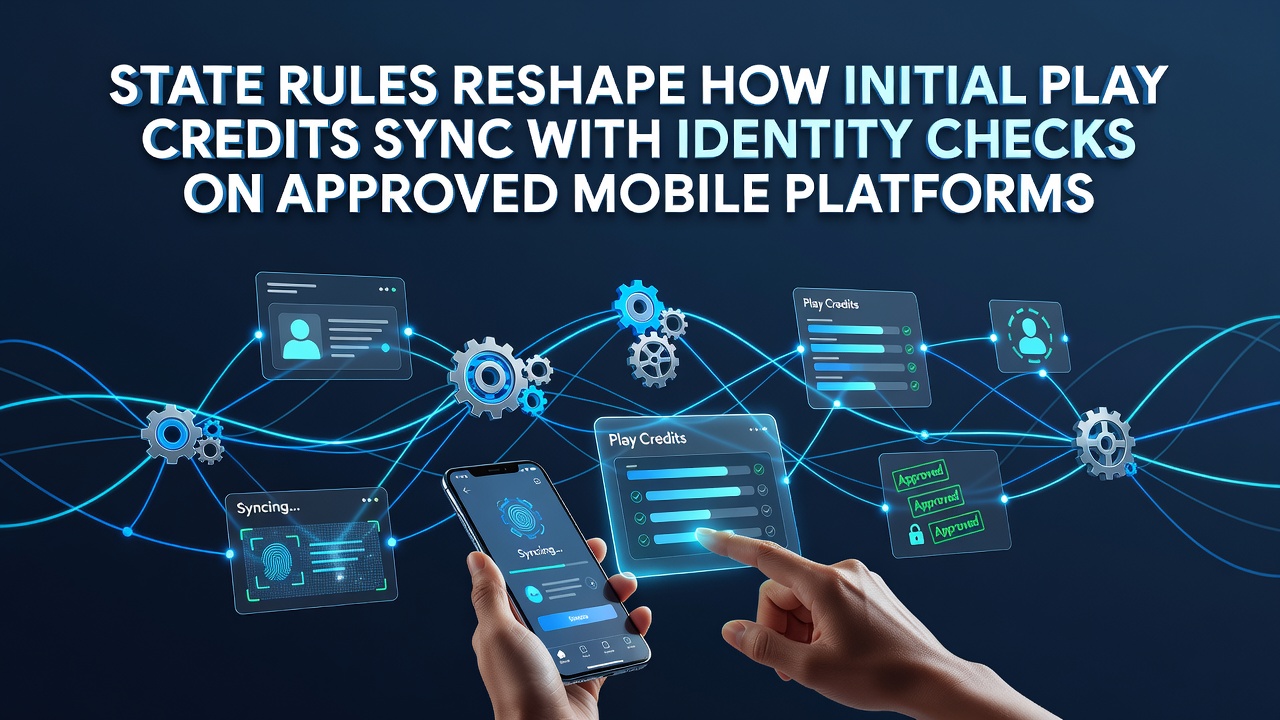
Developers have incorporated progress indicators within the apps to show users exactly where they stand in the verification and credit activation pipeline, and these visual cues help reduce support ticket volume. In practice, the system allows credits to remain locked until every required check passes, at which point the platform automatically updates the balance without further user intervention. State regulators continue to evaluate these systems through periodic audits that examine both the technical logs and the user-facing outcomes.
Conclusion
State rules continue to evolve the relationship between identity verification and initial play credit distribution on mobile platforms, with August 2026 marking a period of broader adoption across additional jurisdictions. The emphasis remains on creating reliable links between completed checks and credit availability while preserving operational efficiency for licensed operators. Ongoing data collection from regulatory bodies will shape future refinements as technology and compliance requirements advance in tandem.