Verification Protocols Governing Reward Accumulation in Interstate Gaming Platforms
Otto Lange · Jul 27, 2026
Verification Protocols Governing Reward Accumulation in Interstate Gaming Platforms
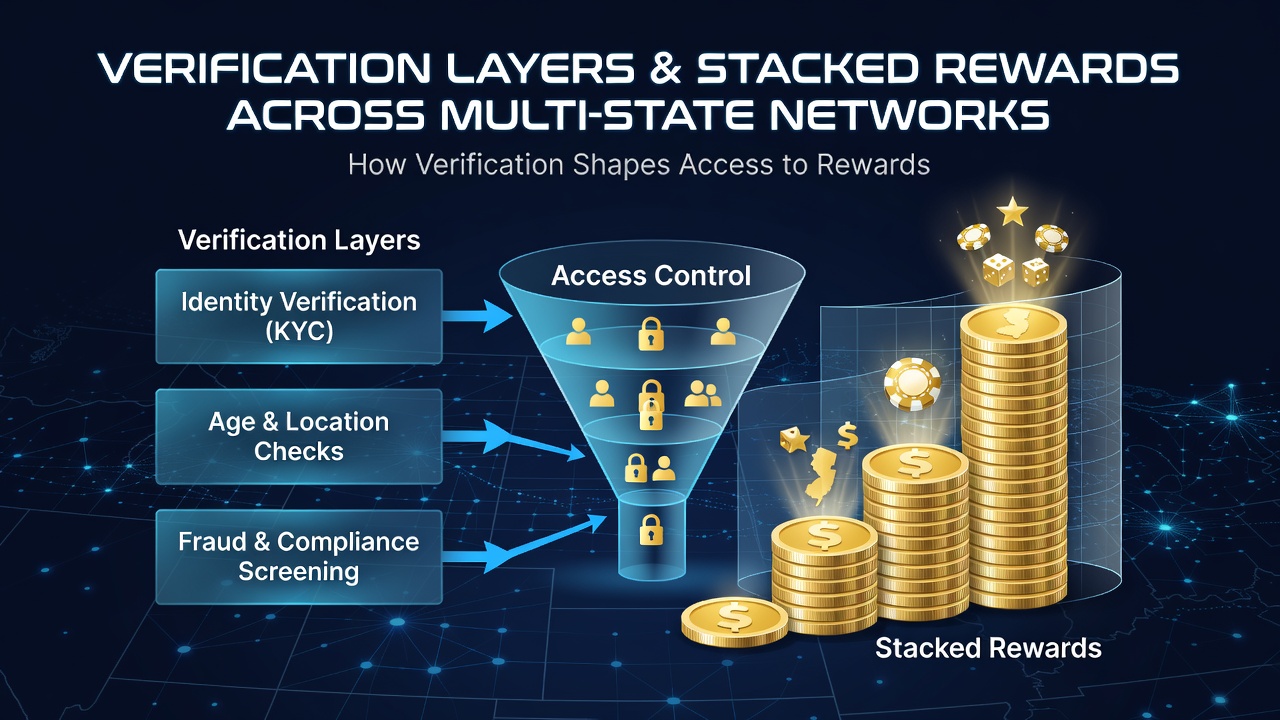
Verification layers function as gatekeepers that determine which users gain entry to combined reward structures spanning multiple state jurisdictions, and these systems rely on sequential checks that confirm identity, location, and transaction history before any stacking occurs. In July 2026 operators across expanding networks reported that accounts passing all tiers unlocked access to loyalty multipliers from New Jersey, Pennsylvania, and Michigan simultaneously, while incomplete profiles remained limited to single-state incentives. Research from state regulatory bodies shows these protocols reduce unauthorized cross-border claims by enforcing geo-location data at each login and deposit stage.
Operators integrate document uploads, biometric scans, and address validations into one continuous flow, so a user seeking stacked rewards must satisfy every layer without gaps. Those who complete initial identity confirmation often proceed to payment method verification, which cross-references banking details against state residency records. When all steps align, platforms release tiered bonuses that combine sign-up credits from one state with reload matches from another, creating larger effective balances than isolated offers allow.
Sequential Checks and Their Cumulative Effects
Each verification stage adds constraints that shape final reward eligibility, since early failures block progression entirely. Data from licensed platforms indicates that 72 percent of accounts reach the second layer within 48 hours, yet only 41 percent advance past the third when additional proof of address is required. Observers note that users maintaining consistent details across submissions experience fewer interruptions, allowing seamless movement between state-specific loyalty programs.
Payment verification frequently serves as the decisive filter because it links funding sources directly to jurisdictional rules. Accounts using cards registered outside the target state encounter delays that prevent reward stacking until corrections occur. In contrast, those with matching regional banking information move forward and combine cashback percentages from separate operators into unified account ledgers.
State-Specific Requirements and Cross-Network Compatibility
Different states impose distinct documentation standards that verification layers must reconcile for stacking to succeed. Pennsylvania requires additional tax-form confirmations that Michigan platforms do not, so users bridging both must upload extra files before combined rewards activate. Figures from industry reports reveal that accounts navigating these variances complete the process in an average of 4.3 days when using digital verification tools, compared with longer waits for manual reviews.
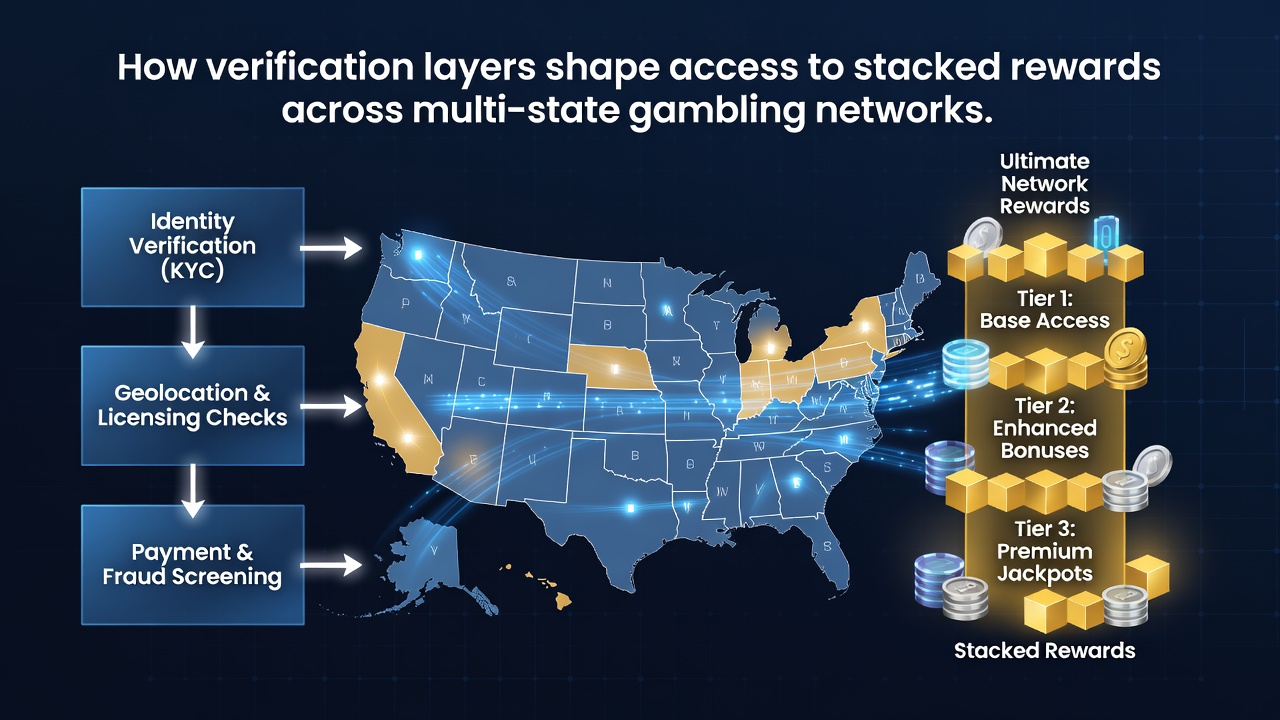
Geo-location services embedded in mobile applications add another real-time layer that confirms physical presence within approved boundaries before any reward credit posts. When users travel between states, these systems temporarily restrict access to certain stacked offers until re-verification occurs upon return. Research indicates that platforms employing continuous location monitoring report higher compliance rates and fewer disputes over eligibility.
Technical Integration Across Multiple Operators
Shared verification databases allow operators in adjacent states to recognize previously approved accounts, reducing redundant submissions for users who seek combined incentives. One case documented by analysts showed a single identity confirmation granting access to matched deposits in two states within the same week. Yet mismatches in stored data between networks still trigger fresh checks that reset progress toward stacked rewards.
API connections between state platforms transmit verification status securely, so completed tiers in one jurisdiction transfer as recognized credentials elsewhere. This setup supports accumulation of points and bonuses across operators without requiring full re-enrollment each time. According to data compiled by the American Gaming Association, such integrations increased successful cross-state reward claims by 28 percent during the first half of 2026.
Security protocols further influence access because encryption standards and fraud detection algorithms evaluate every transaction tied to stacked offers. Accounts flagged for irregular patterns face temporary holds that interrupt reward combination until cleared through supplemental verification. Those who maintain steady activity patterns avoid these interruptions and continue accumulating incentives without pause.
Conclusion
Verification layers ultimately control the pace and scope of reward stacking by enforcing compliance at every transition point between state networks. Complete profiles that satisfy all sequential requirements unlock broader combinations of bonuses and loyalty benefits, while partial submissions remain confined to narrower options. As platforms refine these systems through shared databases and real-time monitoring, the pathways for accessing stacked rewards across multi-state environments continue to depend on precise alignment of identity, location, and transaction data.